Blog
Insights, news, and thought leadership on AI governance and responsible AI practices.
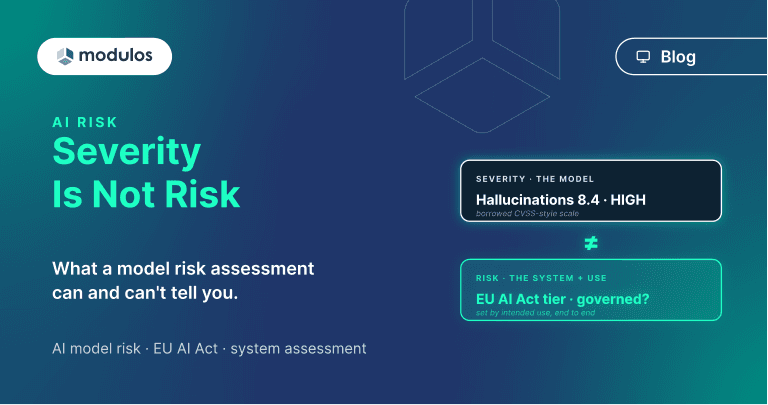
AI Model Risk vs System Risk: What a Model Score Misses
A model risk score grades the model on a severity scale, but your AI risk is set by how the system is used and emerges at the system level. What a model risk assessment can and can't tell you, and what to demand instead.
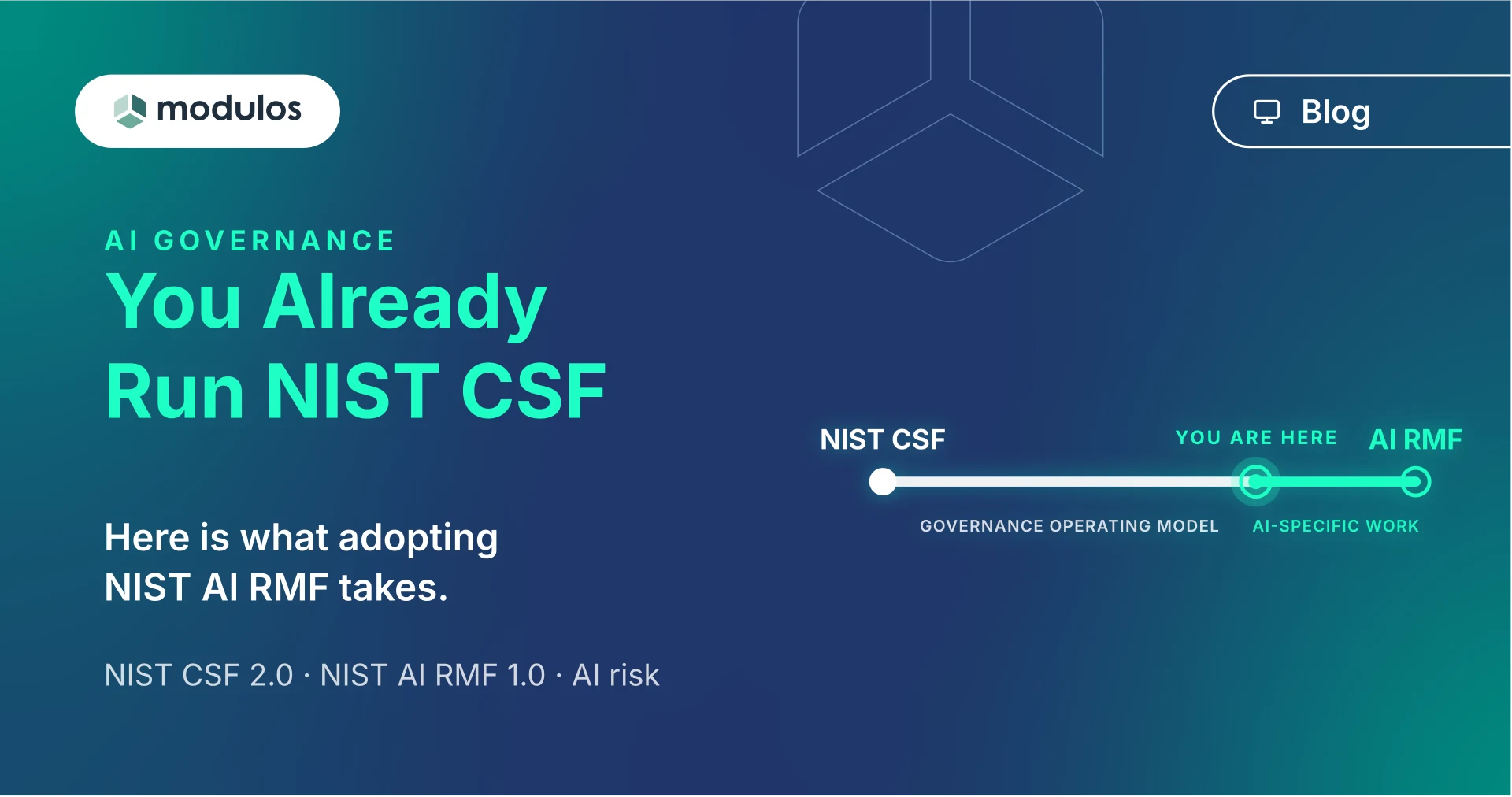
NIST CSF vs NIST AI RMF: A Migration Guide
If you already run NIST CSF, the governance machinery carries over and AI RMF is a manageable overlay. What transfers, what you build new, and how the same work advances ISO 42001 and the EU AI Act.

Modulos Named in Gartner® Magic Quadrant™ for AI Governance
Modulos is recognized in the first ever Gartner® Magic Quadrant™ for AI Governance Platforms. Kevin Schawinski on why the category has grown up, and what that means for scaling AI safely.
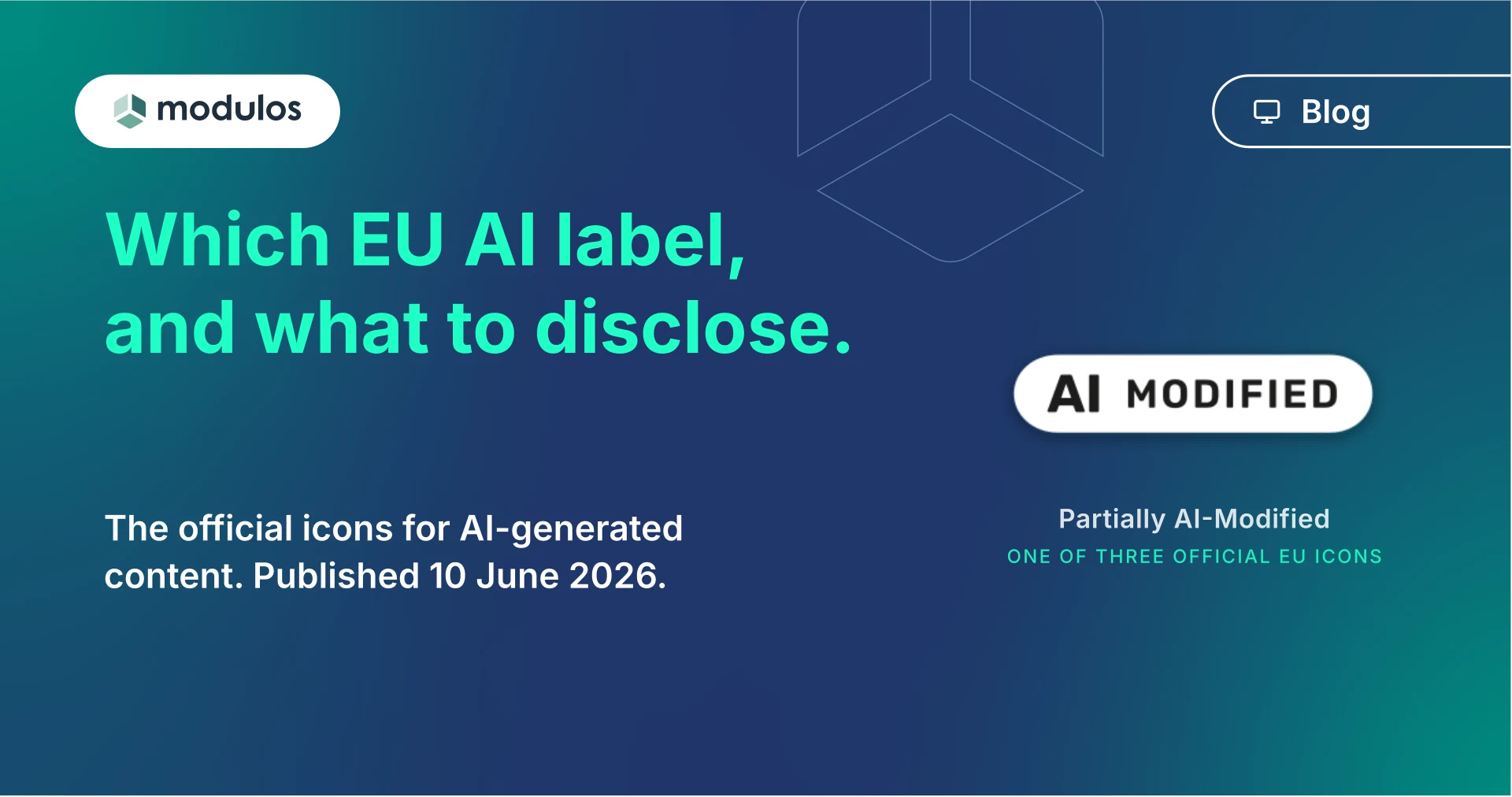
The EU's AI Content Labels: Which Icon, What to Disclose
The Commission published the official EU icons for labelling AI-generated content on 10 June 2026. Which of the three to use, what Article 50 actually makes you disclose, and how to display it before 2 August 2026.
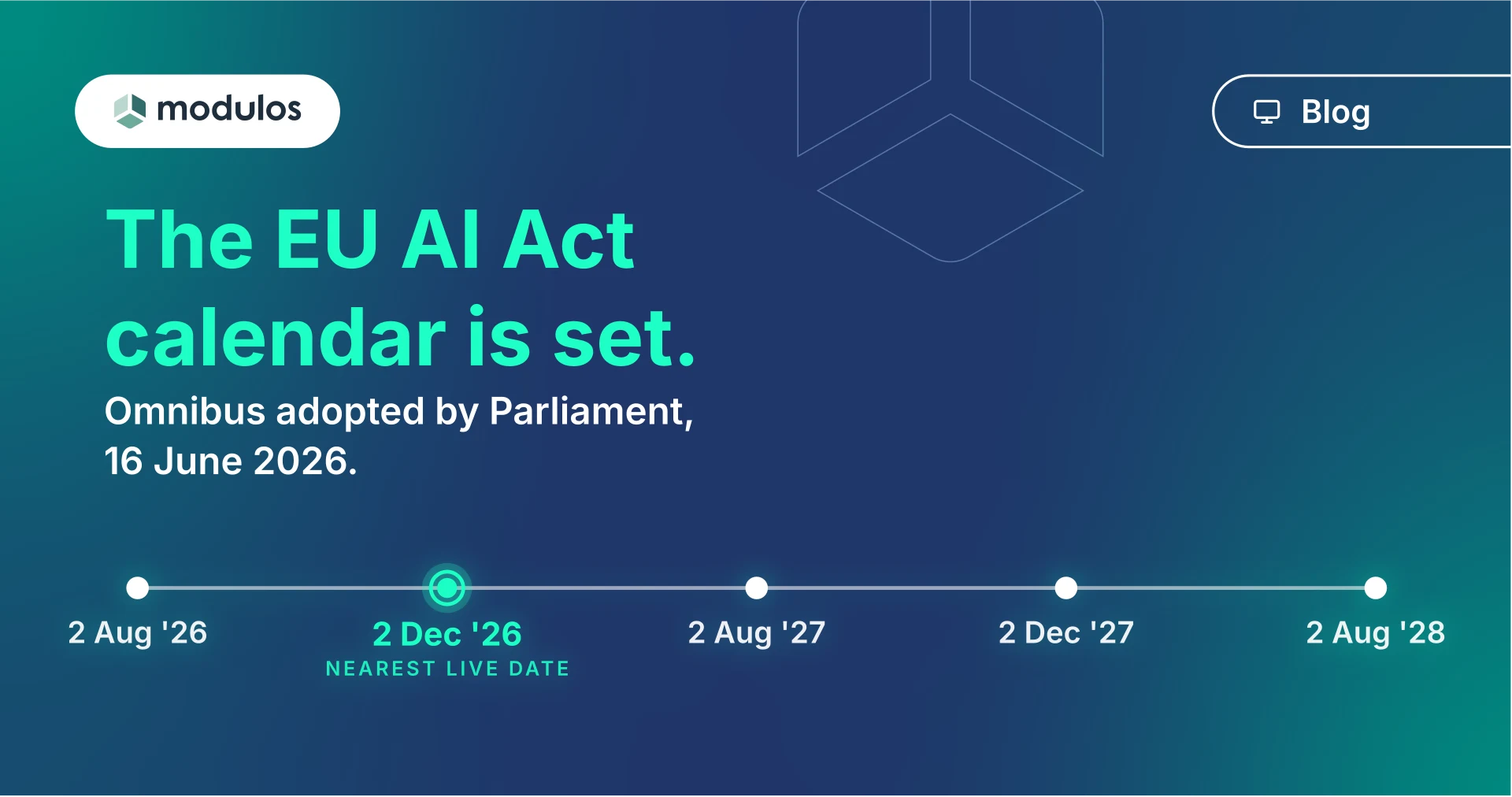
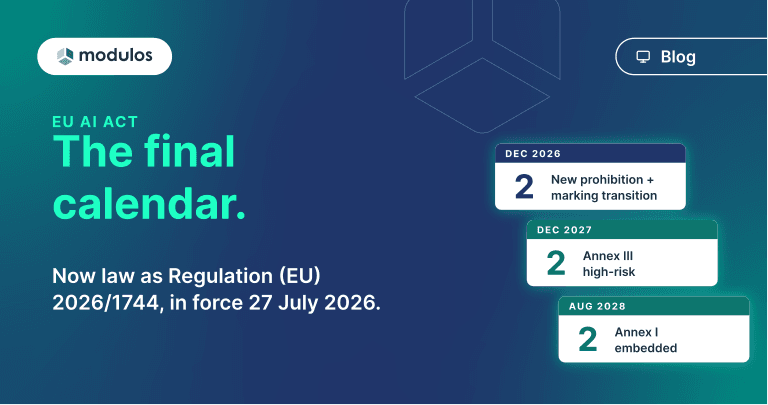
The EU AI Act Omnibus Deadlines Are Now Fixed
The European Parliament adopted the EU AI Act digital omnibus on 16 June 2026. The deadlines are now fixed: the calendar, the nine changes, and what to do before the nearest one on 2 December 2026.

Colorado SB 189: Developer and Deployer Obligations
Colorado's SB 189 replaces the unenforced 2024 Colorado AI Act with a narrower but operative framework. The novel piece sits in Section 6-1-1707's developer-deployer fault allocation. For any company with EU exposure, an EU AI Act programme is the right governing layer for SB 189 too.
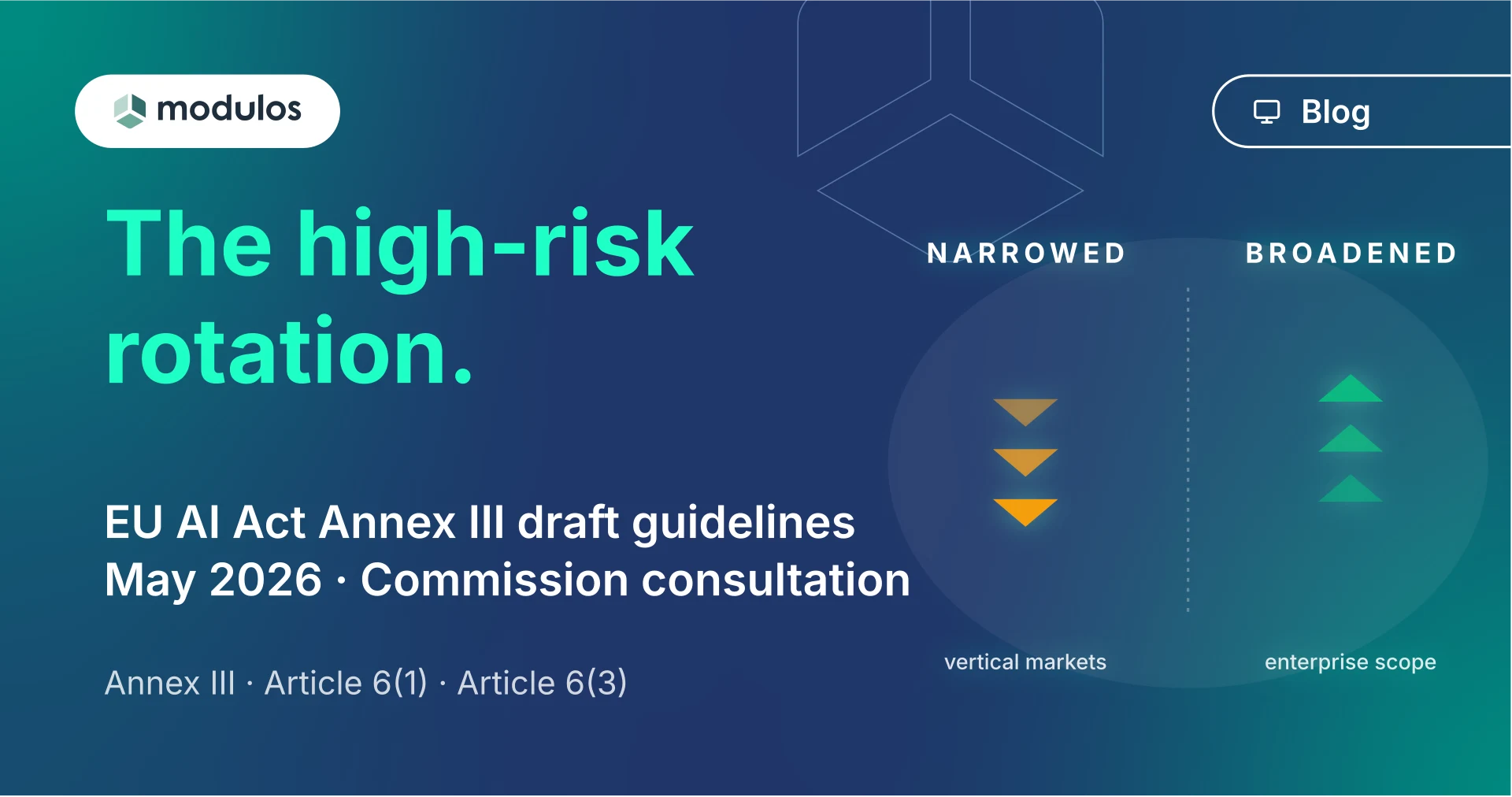
EU AI Act Annex III Draft Guidelines: What Changed
The Commission's May 2026 draft guidelines for Annex III rotated high-risk coverage toward employment, insurance, and education. Here's what changed and why waiting for the final text is a strategic mistake.
EU AI Act Primer: Timelines and Obligations